
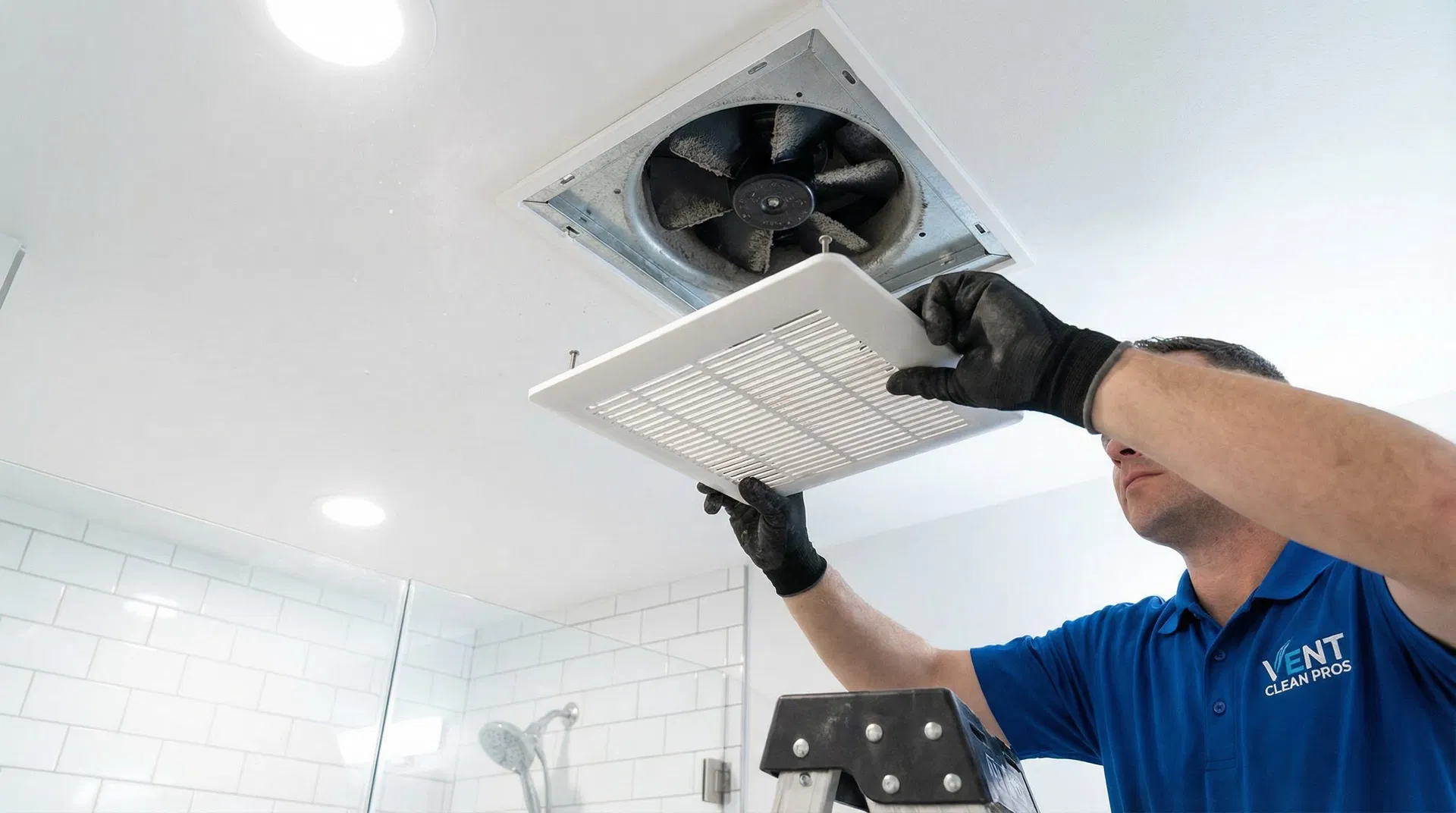
Bathroom Exhaust Fan Cleaning: Why It Matters More Than You Think
Bathroom Exhaust Fan Cleaning: Why It Matters More Than You Think
Last updated: October 2, 2026
Of all the ventilation equipment in your home, the bathroom exhaust fan is the easiest to forget. It is small, it is above eye level, and it makes noise when it runs, which feels like proof it is working. But a bathroom fan can spin happily while moving almost no air — and in Nova Scotia's damp climate, a fan that is not moving air is an open invitation to mold.
Here is why this humble fixture deserves a place on your annual maintenance list.
What Your Bathroom Fan Actually Protects You From
Every hot shower dumps a remarkable amount of moisture into a small enclosed room. The exhaust fan's job is to remove that moisture before it condenses on walls, ceilings, grout, and fixtures. When it works, the bathroom dries within minutes. When it does not, the moisture soaks in — and the consequences arrive in a familiar order: fogged mirrors that never clear, peeling paint and bubbling drywall paper, stained or darkening grout and caulk, musty odours, and eventually visible mold on the ceiling and in the corners.
Health Canada identifies indoor mold as a respiratory irritant, and bathrooms are among the most common sites for household mold growth precisely because they combine high moisture with inadequate ventilation [1]. The repair bills escalate quickly too — repainting a moisture-damaged bathroom ceiling costs several times what years of fan cleaning would have.
Why Fans Fail Silently
Bathroom fans clog from the inside out. Every time the fan runs, it pulls humid air — and whatever that air carries — across its blades and housing. Dust, lint, hair, and hairspray residue build up on the blades and grille in a sticky mat that humidity makes worse. The fan motor keeps spinning, the noise sounds normal, but airflow drops to a fraction of the rated capacity.
The insidious part is the gradualness. You do not notice the bathroom getting steamier month by month; you just start wiping the mirror more often. By the time paint peels, the fan has been underperforming for a year or more.
What Professional Cleaning Includes
A proper bathroom fan cleaning is more than vacuuming the cover. Our service removes the cover and deep cleans it, cleans the fan blades and housing where the airflow-killing buildup lives, inspects the motor, checks the duct connection (a disconnected duct vents your shower moisture into the attic — a surprisingly common find), and verifies airflow after reassembly. If the fan is undersized, worn out, or beyond saving, we can install a modern, quiet, energy-efficient replacement.
[NORDAIR PHOTO — before/after of a cleaned bathroom fan from a real job, filename: bathroom-fan-before-after-cleaning.webp]
How Often, and What You Can Do Yourself
Once a year is the right professional cleaning interval for most homes; bathrooms with heavy daily use benefit from every six months. Between visits, you can vacuum the cover and grille from below every couple of months — it takes two minutes with a brush attachment and slows the deeper buildup. If your fan is already struggling, our article on what to do when your bathroom fan stops removing moisture [blocked] covers the troubleshooting path.
Bathroom fan cleaning is also one of the easiest services to bundle — it pairs naturally with heat pump, HRV, or dryer vent visits, and our whole-home ventilation maintenance checklist [blocked] shows how to coordinate everything on one schedule.
[NORDAIR FIELD NOTE — insert 1–2 sentences of real technician observation here, e.g., the condition of bathroom fans the team typically finds and how often ducts turn out to be disconnected.]
Frequently Asked Questions
How often should a bathroom exhaust fan be cleaned?
At least once a year for most homes, and every six months for heavily used bathrooms. Vacuuming the cover from below every couple of months between professional cleanings slows the buildup.
How do I know if my bathroom fan needs cleaning?
Visible dust on the cover, louder or rattlier operation, mirrors that stay fogged long after a shower, moisture lingering on walls, or musty odours. The tissue test also works: hold a square of toilet paper against the grille while the fan runs — if it does not stick firmly, airflow is weak.
Can I clean my bathroom fan myself?
You can vacuum the cover and grille, which helps. Deep cleaning the blades and housing means working above your head with the power off and the unit partially disassembled — doable for a confident DIYer, but most homeowners prefer to bundle it with other service.
Why is my bathroom still steamy with the fan on?
Usually dust-clogged blades and housing cutting airflow, but possibly a disconnected or crushed duct, an undersized fan, or a failed backdraft damper. A professional cleaning with airflow verification identifies which.
How much does bathroom fan cleaning cost in Nova Scotia?
At NordAir Atlantic, a single fan cleaning starts at $89, with multi-fan packages from $149 and full replacement from $249. It is among the least expensive home services relative to the damage it prevents.
Can a dirty bathroom fan cause mold?
Indirectly, yes. The fan itself does not cause mold, but a fan that cannot remove shower moisture creates the persistently damp conditions mold needs. Bathrooms with weak ventilation are among the most common household mold sites [1].
When did your bathroom fans last get cleaned? NordAir Atlantic's bathroom fan cleaning service [blocked] starts at $89 and bundles easily with other services. Call (902) 903-0772 or book your cleaning [blocked].
References
Ready for Cleaner Air?
Our expert team at NordAir Atlantic is ready to help with all your heat pump cleaning and ventilation needs.